Wednesday, November 29, 2006

"Where Do We Put the Next Hundred Million?"

Submitted by Paul Ellis

The question is being asked by columnist Neil Peirce and the figure refers to the next wave of population growth virtually certain to occur by 2050. Peirce is foremost among American journalists on metropolitan regions, their political and economic dynamics, and their emerging national and global roles.

In a recent syndicated column, Peirce observes that 70 percent of the coming population and economic growth will take place in American “megaregions” sharing environmental systems and transportation networks that are far beyond the capacity of any individual metro region to manage. Good stewardship would dictate a new commitment to "smart” highways and high speed commuter rail that might speed workers, business travelers and goods between the megaregions’ networked cities, "stimulating idea exchange, expanding labor pools and providing fresh opportunities for workers," Peirce observes.

As the Puget Sound region plays catch-up with its transportation investments, we need to also look forward to the needs that will confront the next generation.

Paul Ellis is lead staff for RAMP; an employee of the Tacoma-Pierce County Chamber, Ellis led the Pierce County Transportation Advisory Committee (PCTAC), the communityÂ’s largest transportation planning effort.

Tuesday, November 28, 2006

Gig Harbor Next to Up Traffic Fees

Submitted by Paul Ellis

The Gig Harbor City Council is planning action on a proposal that will increase the city’s traffic impact fee to $3,171 for every vehicle trip a new project creates during the afternoon peak hours.

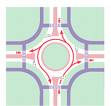
The proposed increase will generate almost $22 million of the $68.7 million needed for 17 major street projects to be built over the next six years, including widening the roundabout at Borgen Blvd. City Council members could vote on the proposed ordinance December 11th.

The proposal is one of several recently adopted or under consideration by local governments to increase traffic impact fees:
  • Pierce County adopted a plan last month to charge $34 to $3,300 per new building, depending on its location and other factors;
  • Bonney Lake increased its fee to about $4,000 per trip in August;
  • University Place is considering charging as much as $5,000 per trip.
Paul Ellis is lead staff for RAMP; an employee of the Tacoma-Pierce County Chamber, Ellis led the Pierce County Transportation Advisory Committee (PCTAC), the communityÂ’s largest transportation planning effort.

Monday, November 27, 2006

RAMP Co-Chairs Meet US Transportation Leaders

Submitted by Paul Ellis

RAMP co-chairs David Graybill and Tim Farrell were part of a contingent of about forty regional decision-makers who met for lunch today in Everett with U.S. Senator Patty Murray and U.S. Transportation Secretary Mary Peters.

Participants talked briefly with the two top national transportation leaders, highlighting regional progress on transportation issues and the importance of transportation improvements for maintaining economic growth, as well as appreciation for federal funding for key projects in the burgeoning Puget Sound region.

Murray is the senior U.S. Senator from Washington State; the Senate Democratic Caucus of the 110th Congress recently elected Murray as Conference Secretary. Widely recognized as a leader on transportation issues in the Senate, Murray is the ranking member of the committee that funds the U.S. Department of Transportation.

Prior to joining President George W. BushÂ’s Cabinet, Peters worked in Phoenix, AZ, as the national director for transportation policy and consulting at HDR, Inc., a major engineering firm. As leader for the Federal Highway Administration (FHWA) from 2001 to 2005, she placed special emphasis on finding new ways to invest in road and bridge construction, including innovative public-private partnerships that help build roads faster and at less expense. She also was a strong advocate for using new technology to reduce construction time, saving taxpayer money and resulting in safer, longer-lasting roads and highways.

Paul Ellis is lead staff for RAMP; an employee of the Tacoma-Pierce County Chamber, Ellis led the Pierce County Transportation Advisory Committee (PCTAC), the communityÂ’s largest transportation planning effort.

Friday, November 24, 2006

Despite Levy Loss, Pavement Rolls in Tacoma

Submitted by Paul Ellis

Budgets in recent years have contained only money for pothole patching, but Tacoma City Manager Eric Anderson’s proposed 2007-2008 budget sets aside $2.3 million each year for residential road repair and resurfacing. If approved by the Tacoma City Council, this money could put smooth surfaces on up to 143 blocks a year out of the city’s 6,600 blocks in need of significant repair.

Anderson's proposal seems to address the widespread public belief that city government should fix the streets with the money it already has--like the $4 million in gas tax money Tacoma gets each year from Washington State--while allowing needed repairs to move forward, albeit nowhere near as quickly as the levy would have allowed. Tacoma leaders have wisely decided to table another levy vote for the near future so as not to compete with regional transportation measures already headed for the ballot next fall.

Paul Ellis is lead staff for RAMP; an employee of the Tacoma-Pierce County Chamber, Ellis led the Pierce County Transportation Advisory Committee (PCTAC), the community’s largest transportation planning effort.

Tuesday, November 21, 2006

Pierce County Responds to RTC's Recommendations

Submitted by Paul Ellis

The Regional Transportation Commission held their first public hearing--in Pierce County--tonight, and pitched the benefits of a souped-up Puget Sound transportation mega-agency.

Co-chair John Stanton began the meeting with a brief presentation outlining the Commission's current view on regional transportation issues as reflected in the draft recommendations released last week:
  • Regional transportation is in a state of crisis;
  • Currently identified sources of funding will be inadequate to meet the region's growing needs to the tune of a $62 billion shortfall from $134 billion needed over the next 2.4 decades;
  • Regional transportation governance is "fragmented, uncoordinated and hence unproductive," according to Stanton.
This introduction was followed by almost an hour and a half of testimony from just five entities, most of them from Seattle and most in favor of the recommended changes. The one exception was Pierce Transit CEO Lynn Griffith, who was accompanied by Tacoma Mayor Bill Baarsma, current chair of the board for the transit agency. Griffith told Commissioners that:
  • Opinions about PT expressed by RTC's focus group were much harsher than those expressed in August in a statistically valid survey performed for WSDOT;
  • There is much greater collaboration between local and regional agencies than was reflected in the RTC report;
  • Recent progress in collaboration and accountability has been and is occurring and should be duly noted.
Mayor Baarsma noted how well the different entities in Pierce County already work together, and he cited RAMP as one group that is effective but was not considered in the RTC's survey of the regional transportation system. He expressed concern that a new mega-agency could be so centralized that it might replace "the organic with the bureaucratic."

Somewhat after 7:00 p.m., members of the public were allowed to testify--with a three-minute limit. Some highlights:
  • Sean Egan spoke on behalf of the Port of Tacoma, asking Commissioners to consider whether their recommendations "might overreach real progress in prioritization, accountability and funding already taking place on the ground" and thus become counterproductive;
  • Randy Lewis, offering comments on behalf of the City of Tacoma, suggested that "Tacoma and Pierce County already utilizes the model that you ought to consider for regional governance";
  • RAMP Co-chair David Graybill told commissioners that the coalition "is a good model and should be considered in your recommendations" and stated that sub-area equity--which the draft report sees only as an impediment to progress--not only introduces a "sense of fairness" but provides a safeguard for accountability.

Public comment will still be accepted (in writing) through November 30th. The final report from the RTC will be submitted to the 2007 Legislature.

Paul Ellis is lead staff for RAMP; an employee of the Tacoma-Pierce County Chamber, Ellis led the Pierce County Transportation Advisory Committee (PCTAC), the community's largest transportation planning effort.

Friday, November 17, 2006

Pennsylvania's RTC Recommends Raising Revenues

Submitted by Paul Ellis

On RAMP has written previously about Pennsylvania Governor Ed Rendell's Transportation Funding and Reform Commission and its work paralleling (in some respects) that of Washington State's Regional Transportation Commission (RTC). Earlier this week, the Pennsylvania group released its final recommendations for how to fill Pennsylvania's $1.7 billion transportation funding gap.

Pennsylvania's commission was given the mandate to identify new revenues to fill the gaps. Highways and bridges require $900 million in additional funding per year, while public transit requires an additional $760 million per year, the commission concluded. The final report recommends revenues from the following sources:
  • Increase the cost of vehicle registration and license fees to raise about $150 million a year for highways and bridges;
  • Increase realty transfer taxes that would add about $5 a month to a homeowner's 30-year, $150,000 mortgage and help out public transportation;
  • Seek public-private partnerships to reduce the need to raise taxes (e.g., leasing the Pennsylvania Turnpike and setting tolls for existing roadways);
  • Raising the gas tax by 11.5 cents for projects under state jurisdiction and by one more cent for local highways and bridges.

Paul Ellis is lead staff for RAMP; an employee of the Tacoma-Pierce County Chamber, Ellis led the Pierce County Transportation Advisory Committee (PCTAC), the community's largest transportation planning effort.

It's Official--Regional Congestion is Growing

Submitted by Paul Ellis

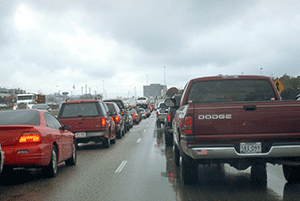
The Washington State Department of Transportation's annual congestion report was released on Wednesday, and it shows that traffic congestion in the Puget Sound region is worse today than it was two years ago. On 34 of the 35 commute routes analyzed in the report, travel times have increased at peak periods, speeds have slowed, peak volumes have lengthened, and the reliability of travel times has grown worse--which means the system is less successful in moving people and freight.

Evening commute delays are getting worse than morning commute delays, possibly because there is more non-commuting traffic during afternoon hours. The data shows that I-5 Corridor commuters between Federal Way and Everett continue to experience the longest peak-period congestion.

Paul Ellis is lead staff for RAMP; an employee of the Tacoma-Pierce County Chamber, Ellis led the Pierce County Transportation Advisory Committee (PCTAC), the community's largest transportation planning effort.

Thursday, November 16, 2006

RTC Recommendations Now Online

Submitted by Paul Ellis

The Regional Transportation Commission yesterday published its draft recommendations to Governor Gregoire & the Washington State Legislature on how regional transportation can be better governed and financed in King, Kitsap, Pierce and Snohomish counties.

In brief, the document calls for the merger of six agencies--Sound Transit, King County Metro, Pierce Transit, Kitsap Transit, Community Transit and Everett Transit--into one to plan and finance projects. The recommendations call for tolls, user fees and private-public partnerships as ways to pay for transportation needs rather than raising taxes.

The document is under review by members of RAMP's staff team, but participants are also encouraged to review the draft and participate in the RTC's upcoming public hearing next week in Tacoma.

Paul Ellis is lead staff for RAMP; an employee of the Tacoma-Pierce County Chamber, Ellis led the Pierce County Transportation Advisory Committee (PCTAC), the community's largest transportation planning effort.

Tuesday, November 14, 2006

WSTC Adopts WA Transportation Plan

Submitted by Paul Ellis

The Transportation Commission adopted the updated 20-year Washington Transportation Plan today after two years of effort coordinated with stakeholders from across Washington State. The plan will serve as a blueprint for construction and provide strategies to guide decisions and investments needed to develop the state’s transportation system for the future.

Recognizing a projected $26 billion gap in high-priority system needs, the Commission developed five investment guidelines to set overall priorities and form the basis of the plan: preservation, safety, economic vitality, mobility. and environmental quality and health.

Paul Ellis is lead staff for RAMP; an employee of the Tacoma-Pierce County Chamber, Ellis led the Pierce County Transportation Advisory Committee (PCTAC), the community’s largest transportation planning effort.

Monday, November 13, 2006

Invitation to RAMP Participants

The Regional Transportation Commission will soon make recommendations to Governor Christine Gregoire on improvements to how regional transportation is governed and financed in King, Kitsap, Pierce and Snohomish counties.

The Commission's draft report will be available online this Wednesday, with public comment taken until the end of this month. RAMP participants are encouraged to review the draft report and offer comments to the Commission.

The Commission will also host a public meeting in Pierce County as follows:

Tuesday, November 21st
5:00 p.m. - Public Testimony Sign-Up
5:30 p.m. - Public Hearing
Port of Tacoma Business Center
(3600 Port of Tacoma Rd.)

Friday, November 10, 2006

Gazing Into the Crystal Ball

Submitted by Paul Ellis

What do yesterday's election results tell us about public attitudes towards transportation funding? What guidance can the recent election give policy-makers about next November's "big vote" on roads and transit?

First, the failure of propositions in both Seattle and Tacoma to fix crumbling streets most likely indicates public desire to see current tax revenues used wisely before jurisdictions consider new taxes. Most voters--rightly or wrongly--believe that local governments should use existing revenues to maintain transportation facilities.

Second, transit may be the exception to that rule. Seattle's "Transit Now" proposal passed by a wide margin, as have previous transit proposals in many Puget Sound jurisdictions.

Or it may be that proposals to expand services or to create new facilities are what voters want--that's another way to read Seattle's results, where voters turned down a measure to fix streets and bridges but gave the nod to expanded transit services.

Admittedly, this gaze into the crystal ball is a little cloudy (they usually are!). For a clearer glimpse into the collective mind of the Puget Sound's body politic, check out the recent summary of public opinion released by the Regional Transportation Investment District.

Paul Ellis is lead staff for RAMP; an employee of the Tacoma-Pierce County Chamber, Ellis led the Pierce County Transportation Advisory Committee (PCTAC), the community's largest transportation planning effort.

Wednesday, November 08, 2006

Lessons from Tuesday's Elections?

Submitted by Paul Ellis

If there's a pattern in the results from yesterday's elections that bears an omen for next November's Roads & Transit vote, it's hard to discern:

  • Tacoma's Proposition 1, a property tax levy that would have raised $8 million a year for six years to fund street improvements needed for 6,600 of the city’s 8,800 blocks, failed by a large margin; city leaders failed to overcome a widespread public belief that city government should fix the streets with the money it already has--like the $4 million in gas tax money Tacoma gets each year from Washington State;
  • Seattle's Proposition 1, a nine-year property tax levy lid lift adding $365 million for street repairs and a host of other transportation infrastructure needs, also failed yesterday but by a narrower margin; almost one-fourth of the new dollars from Seattle's measure were to be directed to safety and pedestrian programs, street signs and signals, with millions more earmarked for tree planting, corridor improvements and bike trails;
  • Meanwhile, King County voters narrowly passed Proposition 2--"Transit Now"--which will raise sales taxes by one tenth of a percent and give Metro $50 million next year to buy buses and increase service, transforming five heavily used routes into "bus rapid transit," boosting service on 30 other routes (mostly in the suburbs), extending or adding routes in growing areas, and increasing vanpooling and service for disabled persons.

Nationwide, more than $40 billion was approved by voters in a number of proposals on Tuesday.

Paul Ellis is lead staff for RAMP; an employee of the Tacoma-Pierce County Chamber, Ellis led the Pierce County Transportation Advisory Committee (PCTAC), the community’s largest transportation planning effort.

Tuesday, October 31, 2006

More Than a Decent Proposition?

Submitted by Paul Ellis

Next Tuesday, voters in several Puget Sound jurisdictions will decide ballot issues that may offer a preview of the public's appetite for funding the tri-county Roads & Transit Plan.

Tacoma's Proposition 1, which would raise property taxes by 48 cents per $1,000 of assessed value each year for the next six years, would help Pierce County's largest municipality improve streets in 6600 blocks city-wide. Seattle voters have their own Proposition 1, part of a broad package dubbed "Bridging the Gap" and slated to add 36 dollars for every $1000 of assessed value to generate $361 million over nine years for local transportation improvements (very broadly defined). King County Proposition 2 would increase the sales tax by one-tenth of a percent to raise $568 million over the next 10 years for deployment of as much as 20 percent more Metro Transit buses on the road.

Poll after poll in the region ranks traffic congestion as a top drawer issue for Puget Sound voters, but Tuesday's results will reveal how vital the issue really is as citizens "vote with their pocketbooks." Some political insiders worry government is asking for too much, too late--and all at once. Some now worry that voter pushback to the current proposals could jeopardize next year's long-awaited efforts on the Roads & Transit Plan.

Paul Ellis is lead staff for RAMP; an employee of the Tacoma-Pierce County Chamber, Ellis led the Pierce County Transportation Advisory Committee (PCTAC), the community’s largest transportation planning effort.

Friday, October 27, 2006

Road & Transit Elements Emerging

Submitted by Paul Ellis

As explained here on September 11th, Sound Transit and the Regional Transportation Investment District (RTID) are working together on an integrated Roads and Transit Plan that will include multiple extensions of regional transit services along with major road improvements. The specific projects that may be presented for voter approval next November are gradually becoming somewhat clearer.

In July, Sound Transit unveiled three sample investment options that provide a vision of what the transit piece of the future regional system could look like--different scenarios combining new investments in light rail, regional buses, park-and-ride lots, HOV access lanes, transit centers and improved commuter train (Sounder) service. Since that time, more than 5,000 people from throughout the region have taken the time to comment on these options. The maximized rail extension option received the strongest support--and by a wide margin (77%). A telephone survey of the region’s residents underscored the public comments’ call for this option.

Today marks the deadline for public comments on the roads portion of the Plan, coordinated by the RTID. Written comments have been provided by RAMP in addition to participating groups such as the Port of Tacoma and the Economic Development Board.

One major area of concern noted to varying degrees in these comments is the likelihood that neither package (as they now stand, at least) adequately provides the regional connections Pierce County wants and needs, such as light rail all the way to SeaTac Airport and completion of SR-167 to I-5. The die may have been cast in the 2005 Session when the Transportation Partnership fund distribution assigned less than 5% of spending to Pierce County projects.

The ultimate question is this one--when voters are asked next November to open their wallets one more time for transportation improvements, will there be enough on the ticket to make the cost worthwhile?

Paul Ellis is lead staff for RAMP; an employee of the Tacoma-Pierce County Chamber, Ellis led the Pierce County Transportation Advisory Committee (PCTAC), the community’s largest transportation planning effort.

Thursday, October 19, 2006

Seattle Leads the Way

Submitted by Paul Ellis

The Downtown Seattle Association, City of Seattle and King County Metro have combined forces to kick off a transportation coalition led by 249 Puget Sound-area employers, patterned after Portland's successful Lloyd Center Transportation Management Association (profiled here last week).

According to the Puget Sound Regional Council, Seattle's city center is projected to add 48,000 new jobs by 2015. To achieve this level of growth, the Urban Mobility Group is working toward a targeted 6 percent decrease in the number of drive alone commuters. As a first step, the coalition has coordinated a widespread distribution of bus passes and free ferry rides, and wants such benefits to become as common as health insurance and 401(k) accounts.

This effort is part of an ongoing delivery of services through which trip planners employed through the coalition will help employees find their best commute options--whether by bus, train, carpool, vanpool, or bike--and provide incentives to help get them started. Reducing the number of drive alone commuters will help Seattle prepare for continued growth and make way for customers and clients.

As a result of the coalition's efforts, 249 Puget Sound-area employers were named best workplaces for commuters this week by an alliance led by the Environmental Protection Agency, local non-profits and transit organizations.

Paul Ellis is lead staff for RAMP; an employee of the Tacoma-Pierce County Chamber, Ellis led the Pierce County Transportation Advisory Committee (PCTAC), the community’s largest transportation planning effort.

Monday, October 16, 2006

Commute Times, They Are A'Changing!

Submitted by Paul Ellis

Commuting trends are changing as baby boomers near retirement age at the same time that a large immigrant population has swelled the national labor force, according to a report just released by the Transportation Research Board. In the report, Commuting in America III, Virginia transportation expert Alan Pisarski examined U.S. Census data from 1990-2004 and compared data there to reports he filed in 1987 and 1996.

Among the report's findings:
  • Commutes are getting longer--the number of workers who reach their jobs in less than 20 minutes dropped to 47% in 2000 after hovering around 50% for decades, and commutes in 40 states increased by two to four minutes;
  • The number of older female drivers will increase dramatically as baby boomers work past age 65--as the percentage of the population over 65 rises sharply after 2010, a key question will be how many will continue to work and commute;
  • The percentage of Americans who walk to work dropped from 5.6% in 1980 to 3.9% in 1990 and 2.9% in 2000;
  • More than 4 million Americans now work from home--more now than those who walk to work--and a growing number of workers over age 55 are doing so;
  • Although immigrants make up less than 14 percent of all workers, they represent about 40 percent of those in large carpools;
  • Hispanics carpool at a rate double that for non-Hispanics (23% vs. 11%), and there has been a sharp drop in the percentage of African-American households without vehicles (from 31% in 1990 to about 24% in 2000);
  • Although commuting still dominates public discussion about transportation, it represents just a part of the demand Americans make on the system--work travel now only constitutes 16% of all trips.
Factsheets on the study's information and meaning are also available.

Paul Ellis is lead staff for RAMP; an employee of the Tacoma-Pierce County Chamber, Ellis led the Pierce County Transportation Advisory Committee (PCTAC), the community’s largest transportation planning effort.

Thursday, October 12, 2006

Invitation to RAMP Participants

The Regional Transit Investment District (RTID) is seeking ideas, questions, and suggestions on the proposed Blueprint for Progress. Please take a few minutes to review this site, learn about the RTID program, and send them your thoughts.

One of the RTID's guiding principles is to keep the road investments affordable—so they’ll have to make choices about where to invest the region's limited dollars. That’s why they want to know what priorities concern RAMP and its participants, in particular:
  • What road-safety issues concern you the most?
  • Where is the worst congestion in your region?
  • Where do you want investments to be made?

There are many ways to share your ideas. Send an e-mail, mail a letter, or take the online survey. The public comment period on the proposed road investments closes October 27th.

Monday, October 09, 2006

Managing Transportation--Lessons from Portland

Submitted by Paul Ellis

What transportation lessons can Pierce County's City of Destiny learn from Oregon's Rose City? A group of Tacoma's elected officials, city staff and business leaders made the trek south last week to learn how Portland funds and operates its transportation system. Portland is recognized as a national leader in innovative transportation solutions, and its Office of Transportation maintains $5.8 billion in infrastructure facilities from streets and structures to traffic signals and street lights.

Ellis McCoy, Portland's Parking Operations Manager, began with an overview of the city’s current parking system:
  • Broad stakeholder input was sought during development of Portland's Center City Plan, the Central City Transportation Management Plan, and the subsequent Meter District Policy, and a portion of net revenues from parking operations are directed back into local improvements;
  • In the three meter districts, (Central City, Lloyd District, Markham Hill), Portland has 1200 pay stations under management serving 8400 spaces (about 2200 of these just in the greater downtown);
  • Stakeholders develop neighborhood transportation plans with the help of staff, then Council reviews and approves the plans, subsequently establishing a district with a management entity.

Parking "gets the least amount of attention [of any transportation element] but requires the greatest amount of visioning," City Commissioner Sam Adams noted, but offers opportunities for enhancement because "it's subject to numerical analysis." New technology makes parking provision "easier, flexible, more cost effective," he observed.

Gathering broad stakeholder input, informed by strong analysis of current trends, should lead to development of a strategic plan that can guide not just planning but overall resource development and allocation. People don't worry about transportation planning elements like "trip avoidance", but they want to be places where there are lots of things to do--and that's how to make parking and transit use work. "Give people alternatives, not out of political correctness, but because it really is the best way to go," he observed.

When plans completed in 1994 projected 20,000 new jobs and 4,000 housing units coming into the Lloyd District, analysis of the impacts based upon existing levels of transit use (10% of commuters using transit, known as the area's "mode split") showed that growth would close down Portland's freeways at peak hours. Rick Williams, executive director for the Lloyd District Transportation Management Association (TMA), a non-profit business association representing large and small employers, came to the rescue.

The TMA helped Lloyd District employers move from 10-21% mode split over three years; the district's current goal is an ambitious 42%. The TMA committed to buy 6000 bus passes (with a volume discount), arranged with Tri-Met (Portland's transit provider) to establish a new bus route, and accepted meters to limit parking with new funds directed to the TMA. Today the Lloyd District has won an exemption from Oregon's version of Washington's Commute Trip Reduction (CTR) law.

Every employee taken out of a parking stall leads to capacity for four customers or clients, Williams contended. Like Sam Adams, he stressed the need to look at transportation assets as key pieces of a city's economic development toolbox--a tool, not just a "nice to" part of the urban landscape. In the Lloyd District, Williams has been able to offer capacity to new development through better use of existing facilities instead of having to raise money to build new parking complexes, many of which will stand empty or underutilized in off-peak hours.

Paul Ellis is lead staff for RAMP; an employee of the Tacoma-Pierce County Chamber, Ellis led the Pierce County Transportation Advisory Committee (PCTAC), the community’s largest transportation planning effort.

Wednesday, October 04, 2006

Let the Pavement Roll!


Submitted by Paul Ellis

Last evening, the Pierce County Council voted 6-1 to adopt Pierce County's first comprehensive traffic-impact fee program, committing to spend an estimated $488 million over 20 years to widen roads, build new ones and rebuild intersections throughout the unincorporated areas.

The plan anticipates use of the new traffic impact fees and other sources to pay for the program, including state transportation grants, a portion of the 9.5-cent-a-gallon gas tax package approved by the Washington Legislature in 2005 and a portion of the real estate excise tax paid upon sales of property.

Pierce County's adoption of the new fees is expected to encourage adoption of similar fees in localmunicipalitiess like University Place. The City of Tacoma is requesting voter approval of a street tax for similar purposes in the November election.

At its November 1 meeting, RAMP will present a panel discussion detailing the new environment for transportation funding resulting from these measures and delineating the remaining gaps needed to move local projects ahead. Panelists will include Brian Zeigler from Pierce County and Angela Wingate from Investco Financial Corporation.

Paul Ellis is lead staff for RAMP; an employee of the Tacoma-Pierce County Chamber, Ellis led the Pierce County Transportation Advisory Committee (PCTAC), the community’s largest transportation planning effort.

Monday, October 02, 2006

Fatally Deferred?

Submitted by Paul Ellis

Traffic chaos reigned this morning for thousands of commuters in Laval, Quebec, a suburb north of Montreal, as they tried to drive into the city following the collapse of an overpass on a major thoroughfare this weekend. At least five people were crushed to death in their cars with the collapse of the overpass, their vehicles crushed so badly that--when lifted from the rubble--they barely reached the knees of one firefighter.

Three lanes of the overpass plus a pedestrian sidewalk collapsed onto Highway 19 about 1:00 p.m. EST Saturday. Four vehicles--a motorcycle, two cars and a minivan--were on the overpass at the time of the collapse. One witness said he noticed that the road sank an inch or two when he traveled over the overpass minutes earlier and he called emergency dispatchers. A crew was dispatched to pick up the concrete but they did not close the highway. The Transport Ministry did, however, send a message to journalists, warning that there were pieces of concrete on the ground. Minutes later, the structure failed.

Former Quebec premier Pierre Marc Johnson will head a public inquiry to determine exactly what went wrong but thus far officials have no explanation for how or why part of the overpass crumpled to the ground. In the wake of the fatal collapse in Quebec, Ontario and the city of Toronto plan to conduct special inspections on overpasses that are several decades old, and public recognition is growing that the nation's bridges are in desperate need of repair. The overpass that collapsed on Saturday was 36 years old, just over half its life expectancy of 70 years. The engineering community has long warned of an "infrastructure deficit," when projects ranging from water sewage systems to bridges are constructed but not properly maintained because of a lack of resources or planning.

Canadian governments, like those in the United States, have deferred critical transportation investments for years. Public concern in our area has grown recently through the ongoing debate over major renovation projects like the Seattle Viaduct and SR-520, all within the context of a catastrophic earthquake causing structural failure. Perhaps it won't take that big a shove to provoke failure in some of our older bridges or other structures; therefore, the investigation of the Laval collapse and the findings from the engineering review should be of more than passing interest for us, as well. Perhaps the time to act is shorter than we think...

Paul Ellis is lead staff for RAMP; an employee of the Tacoma-Pierce County Chamber, Ellis was the head of the Pierce County Transportation Advisory Committee (PCTAC), the community's largest transportation planning effort.